
When you get a blood test and see that your creatinine is normal, it is natural to feel relieved. Many people immediately think, “My creatinine is normal, so my kidneys must be fine.”
But kidney health is not always that simple.
It is possible to have kidney disease or early kidney damage even when your creatinine level is normal.

Creatinine is an important part of kidney testing, but it is not the only thing that tells us how well the kidneys are working. Other tests, such as eGFR and urine tests, can sometimes show changes that a creatinine test alone may not reveal.
So, if you have ever wondered, “Can I have kidney disease with normal creatinine?” the answer is yes. Let us understand why.
What Does Creatinine Actually Tell Us?
Creatinine is a waste product that is produced by our muscles every day. The kidneys filter it from the blood and remove it through urine.
When the kidneys lose a significant amount of their filtering ability, creatinine can start building up in the blood. This is why doctors commonly include a serum creatinine test when checking kidney function.
The problem is that creatinine does not always rise at the beginning of kidney disease.
A person may have some kidney damage while the kidneys are still able to filter enough waste to keep the creatinine level within the normal range.
That is one of the main reasons a normal creatinine report should not be considered a complete kidney health check.
Why Can Kidney Disease Be Present With Normal Creatinine?
There is no single reason for this. Kidney disease can develop slowly, and changes in kidney function may not immediately produce a noticeable rise in creatinine.
Another factor is muscle mass. Since creatinine comes from muscle activity, people with different body builds can naturally have different creatinine levels. Age and sex can also affect how the result is interpreted.
This is why healthcare professionals look at the complete clinical picture rather than deciding whether the kidneys are healthy based on one number.
For example, someone may have a normal creatinine level but also have albumin in the urine. That finding can be important because it may indicate kidney damage.
Normal Creatinine Does Not Always Mean Normal Kidney Function
This is where many people get confused.
Creatinine mainly helps us understand kidney filtration. But kidney disease can involve damage to the kidneys even before there is a major reduction in filtration.
Think about it like this: a person may have early damage, while the kidneys are still managing to do much of their filtering work.
That is why other kidney tests can be useful.
eGFR
eGFR stands for estimated glomerular filtration rate. It gives an estimate of how well the kidneys are filtering blood.
Creatinine is used when calculating eGFR, along with other factors such as age and sex.
Looking at eGFR together with other findings can give a clearer picture of kidney function.
Urine Albumin
Urine testing can provide information that a blood test cannot.
One commonly used test is the urine albumin-to-creatinine ratio (UACR). It checks for albumin in the urine.
Healthy kidneys generally keep most albumin in the bloodstream. If the kidneys’ filtering barrier is damaged, more albumin can pass into the urine.
So, a person can have normal blood creatinine but still have an abnormal urine albumin result.
That is an important reason not to ignore urine tests.
What Are the Early Signs of Kidney Disease?
Kidney disease can be difficult to notice in its early stages because some people have no clear symptoms.
When symptoms do appear, they can vary from person to person. Some possible signs include:
- Swelling around the feet, ankles, legs, or face
- Changes in the amount or frequency of urination
- Persistent foamy urine
- Blood in the urine
- Unusual tiredness
- Loss of appetite
- Nausea or vomiting
- Breathlessness
- Persistent itching
- Changes in blood pressure
These symptoms are not specific to kidney disease. They can occur for many other reasons as well.
Still, if a symptom continues or seems unusual for you, it is worth discussing with a healthcare professional.
Who Should Pay Extra Attention to Kidney Health?
Some people are more likely to develop kidney problems and may benefit from regular monitoring.
People With Diabetes
High blood sugar over a long period can damage the small blood vessels in the kidneys.
Kidney damage related to diabetes can begin before a person notices any symptoms. For this reason, people with diabetes may be advised to have regular kidney function and urine albumin tests.
People With High Blood Pressure
High blood pressure can put continuous stress on the blood vessels in the kidneys.
It is also possible for kidney disease to contribute to high blood pressure, so the two conditions can affect each other.
Keeping blood pressure under control is therefore an important part of kidney care.
People With a Family History of Kidney Disease
Some kidney conditions can run in families.
If a close family member has kidney disease, talk to your healthcare professional about whether you need regular kidney screening.
People With Previous Kidney Problems
A history of kidney injury, certain kidney infections, kidney stones, or other kidney-related problems may increase the need for follow-up.
The right testing schedule depends on the individual’s condition.
Which Tests Are Used to Check Kidney Health?
There is no single test that can answer every question about the kidneys.
Depending on the person’s health and risk factors, a healthcare professional may recommend tests such as:
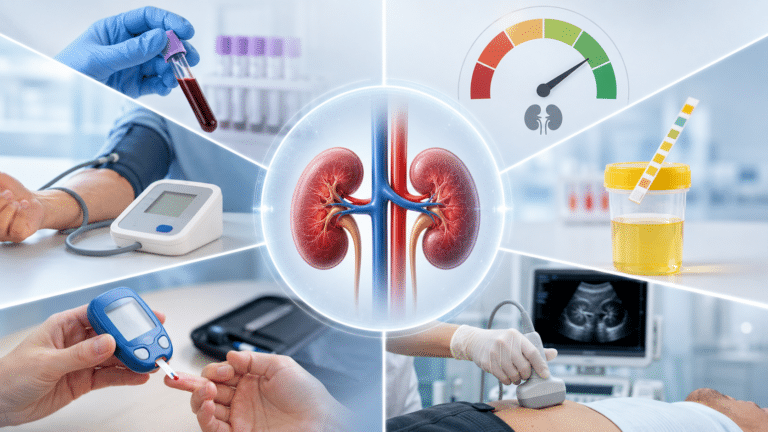
Serum creatinine: Measures the level of creatinine in the blood.
eGFR: Estimates how well the kidneys are filtering blood.
Urine routine examination: Can identify certain abnormalities in the urine.
UACR: Checks for albumin in the urine.
Blood pressure: Helps identify an important risk factor for kidney disease.
Blood sugar tests: Particularly important for people with diabetes or a higher risk of diabetes.
Kidney ultrasound or other imaging: May be recommended when there is a reason to examine the size, structure, stones, blockage, or other changes in the kidneys.
Not everyone needs all of these tests. The appropriate evaluation depends on the person’s symptoms, medical history, risk factors, and previous reports.
What If Your Creatinine Is Normal but Your Urine Test Is Abnormal?
This situation should not be ignored.
For example, if your creatinine is normal but your urine test repeatedly shows increased albumin, your healthcare professional may want to investigate further.
The two results are telling us different things.
The blood test gives information about kidney filtration, while urine albumin can provide information about possible kidney damage.
That is why looking at both can be more useful than focusing on creatinine alone.
What About People With Diabetes and Normal Creatinine?
This is particularly important.
A person with diabetes may have early kidney damage without a noticeable rise in creatinine. They may feel perfectly well and have no obvious symptoms.
Regular monitoring can help detect changes earlier.
If you have diabetes, ask your healthcare professional how often your kidney function and urine albumin should be checked.
What About High Blood Pressure?
High blood pressure is one of the important risk factors for kidney disease.
If blood pressure remains high for a long time, it can affect the blood vessels that supply the kidneys.
At the same time, kidney problems can sometimes contribute to high blood pressure.
So if you have high blood pressure, controlling it and following the recommended kidney check-ups can be an important part of protecting your health.
Can Kidney Disease Be Prevented?
Not every kidney condition can be prevented, but there are several things you can do to support your overall health.
Try to:
- Keep your blood pressure under control.
- Manage your blood sugar if you have diabetes.
- Maintain a healthy weight.
- Stay physically active according to your health condition.
- Follow a balanced diet.
- Avoid taking medicines unnecessarily.
- Take medicines only according to appropriate medical advice.
- Get regular health checks if you have risk factors for kidney disease.
- Do not ignore persistent changes in urine or unexplained swelling.
If you already have kidney disease, your diet and fluid requirements may be different from those of a healthy person. In that situation, follow individualized advice from your healthcare team.
Should You Be Worried If Your Creatinine Is Normal?
A normal creatinine result is generally reassuring. There is no reason to panic simply because you are worried about kidney disease.
However, if you have diabetes, high blood pressure, a family history of kidney disease, abnormal urine results, or persistent symptoms, it is reasonable to discuss your kidney health with a healthcare professional.
The purpose of additional testing is not to create fear. It is to understand what is actually happening and avoid missing an early problem.
When Should You See a Doctor?
Consider getting medical advice if you notice:
- Persistent swelling
- Changes in urination
- Blood in the urine
- Persistent foamy urine
- Unexplained tiredness
- Repeatedly high blood pressure
- Abnormal urine test results
- A history of kidney disease
- Diabetes or other kidney disease risk factors
A healthcare professional can decide which tests are appropriate for you.
Can Ayurveda Be Part of Kidney Care?
Ayurveda takes an individualized approach to health and considers factors such as diet, lifestyle, symptoms, and overall well-being.
If you are interested in Ayurvedic care for kidney health, it is important to first understand your kidney condition and review your medical reports with a qualified practitioner.
Ayurvedic care should be planned according to the individual’s condition and should not replace necessary diagnosis, prescribed treatment, or regular kidney monitoring.
If you are already receiving treatment for kidney disease, do not stop prescribed medicines, dialysis, or other medical treatment without speaking with your treating healthcare professional.
A careful approach to kidney care should always begin with proper evaluation and regular monitoring.
The Bottom Line
So, can you have kidney disease even when creatinine is normal? Yes.
A normal creatinine level is useful information, but it does not tell the whole story.
Early kidney damage may sometimes be detected through urine albumin, eGFR, blood pressure, medical history, or other investigations before creatinine becomes clearly abnormal.
If you have risk factors such as diabetes or high blood pressure, regular kidney monitoring can be especially important.
And if you have symptoms or abnormal test results, do not wait for your creatinine to rise before asking for medical advice.
Your kidney health is about more than one number on a blood report.
At Healvibe Ayurveda, the focus is on informed and individualized approaches to kidney care. If you have concerns about your kidney health, discuss your reports and treatment options with a qualified healthcare professional and an appropriately trained Ayurvedic practitioner.