
“Doctor… my report says my eGFR is 30. Does this mean I will need dialysis now?”
This is one of the most common questions we hear from patients at HealVibe Ayurveda Kidney Care Centre, Pune.
The moment people see eGFR 30 in their report, many of them start searching on Google. Some become scared. Some think their kidneys have completely failed. Others start comparing their reports with someone else’s.
But the truth is…
An eGFR of 30 is important, but it does not tell the complete story about your kidney health.
Two people can have the same eGFR, yet their condition can be completely different.
Let’s understand this in simple language.
Imagine Two Different Patients…
Let’s say there are two patients.
Patient 1
- 42 years old
- eGFR: 30
- Blood sugar is under control
- Blood pressure is normal
- No swelling
- Feels active
Patient 2
- 68 years old
- eGFR: 30
- Diabetes is not well controlled
- High blood pressure
- Swelling in the legs
- Poor appetite
- Constant tiredness
Both patients have the same eGFR—30.
But do they need the same treatment?
No.
Because a laboratory number is only one part of the picture.
Every patient is different.
So, What Exactly Is eGFR?
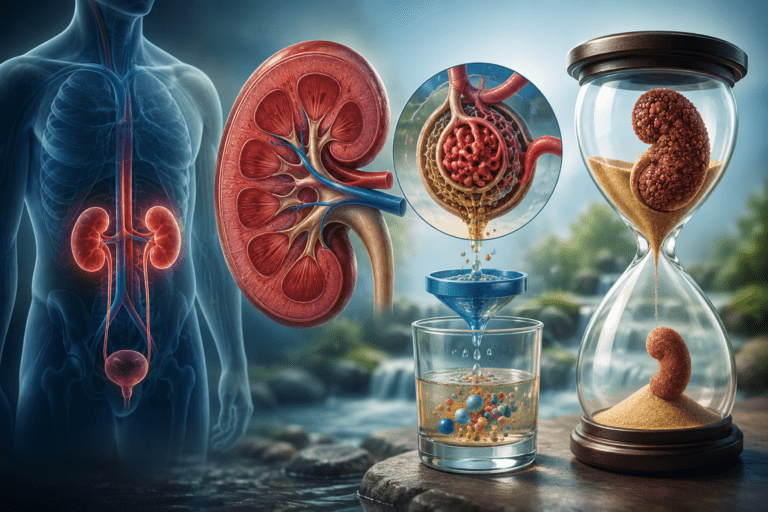
Think of your kidneys as your body’s natural water filter.
Every day, they clean your blood by removing waste products and extra fluids.
eGFR (Estimated Glomerular Filtration Rate) is a test that estimates how well your kidneys are filtering your blood.
A higher number usually means better kidney function.
When kidney function decreases, the eGFR value also goes down.
What Does an eGFR of 30 Mean?
An eGFR of 30 mL/min/1.73m² means your kidneys are working at a significantly reduced level compared to normal.
In medical terms, this usually falls under Stage 3b Chronic Kidney Disease (CKD).
However, eGFR alone is never enough to decide your treatment plan.
Doctors also look at several other important factors before making any decisions.
A Doctor Never Looks Only at eGFR
Along with eGFR, your doctor may also evaluate:
- Serum Creatinine
- Urine Protein
- Urine Albumin
- Blood Urea
- Potassium Levels
- Blood Pressure
- Diabetes Status
- Kidney Ultrasound
- Your Symptoms
Only after reviewing all these reports together can the next step be decided.
Your Body May Give You Early Warning Signs
Some people with an eGFR of 30 may not notice any symptoms.
Others may experience:
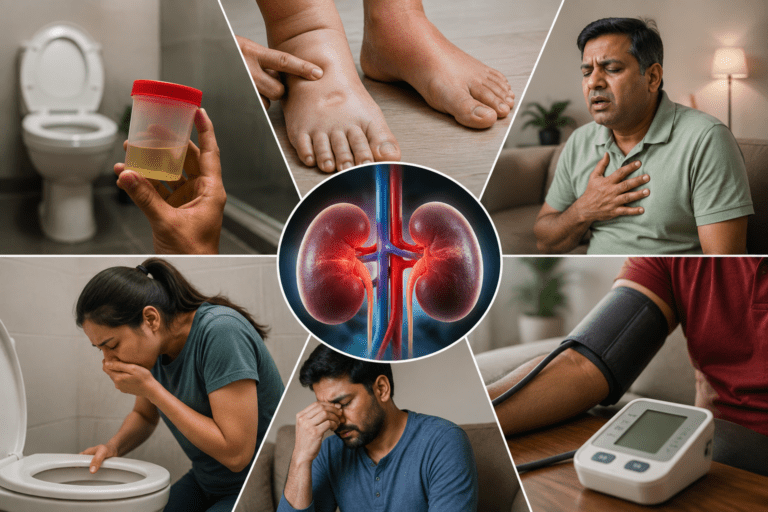
- Feeling tired all the time
- Low energy
- Swelling in the feet or face
- Loss of appetite
- Nausea
- Frequent urination at night
- High blood pressure
- Itchy skin
Remember, every patient is different.
Why Does eGFR Become Low?
There isn’t just one reason.
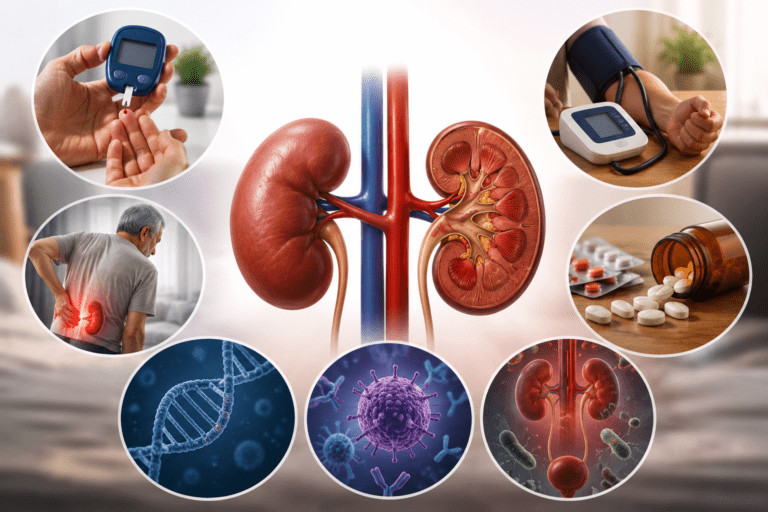
Some common causes include:
Diabetes
Poorly controlled diabetes over many years can damage the kidneys.
High Blood Pressure
High blood pressure can slowly affect the tiny blood vessels inside the kidneys.
Chronic Kidney Disease
Some kidney diseases progress slowly over time.
Frequent Use of Painkillers
Taking painkiller medicines regularly without medical advice may affect kidney health.
Other Causes
- Genetic kidney disorders
- Autoimmune diseases
- Repeated kidney infections
Does eGFR 30 Mean You Will Definitely Need Dialysis?
No.
This is one of the biggest misconceptions.
Having an eGFR of 30 does not automatically mean dialysis is needed.
The decision depends on many factors, including:
- Your symptoms
- Creatinine levels
- Potassium levels
- Fluid overload
- Difficulty breathing
- Overall kidney function
- Other blood test results
That is why eGFR 30 does not always mean dialysis.
Can eGFR Improve?
This is a question almost every patient asks.
The answer is different for every individual.
If the underlying cause is identified and managed properly, blood pressure and diabetes are controlled, lifestyle changes are followed, and treatment is continued regularly, some patients may be able to maintain stable kidney function, and in certain cases, some improvement may be seen.
However, results vary from person to person.
Why Should You Avoid Comparing Your Report with Others?
This is something many patients do.
“My neighbour’s eGFR was 30, and he needed dialysis.”
“My relative also had eGFR 30, and now he is fine.”
But kidney disease does not work that way.
Even if two people have the same eGFR, their age, medical history, symptoms, blood pressure, diabetes, and overall health may be completely different.
That is why comparing reports can create unnecessary fear.
How Does Ayurveda Look at eGFR 30?
In Ayurveda, treatment is not planned based only on a laboratory report.
Along with medical investigations, attention is also given to:
- The individual’s body constitution (Prakriti)
- Present symptoms
- Digestive health
- Lifestyle
- Food habits
- Overall health condition
The goal is to understand the person as a whole rather than focusing only on one number in the report.
What Can You Do If Your eGFR Is 30?
Small changes can make a meaningful difference.
- Take your prescribed medicines regularly.
- Keep your blood pressure under control.
- Manage diabetes carefully.
- Avoid taking painkillers without medical advice.
- Follow dietary advice given by your doctor or dietitian.
- Go for regular follow-up visits.
- Repeat kidney tests as advised.
When Should You Consult a Doctor Immediately?
Do not delay medical attention if you notice:
- Very little urine output
- Severe swelling
- Difficulty breathing
- Persistent vomiting
- Extreme weakness
- Uncontrolled high blood pressure
How Can HealVibe Ayurveda Kidney Care Centre, Pune Help?
At HealVibe Ayurveda Kidney Care Centre, Pune, treatment is not planned based on a single report alone.
Each patient is evaluated carefully, considering:
- Medical history
- Symptoms
- Kidney function
- Lifestyle
- Diet
- Individual health condition
Based on this assessment, a personalized Ayurvedic treatment plan, dietary guidance, lifestyle advice, and regular follow-up are recommended according to the patient’s needs.
Final Thoughts
An eGFR of 30 is not the end of the journey. It is a signal to pay closer attention to your kidney health.
Instead of panicking after seeing one number in your report:
- Understand what it means.
- Consult a qualified doctor.
- Follow the right treatment plan.
- Attend regular follow-ups.
- Take timely steps to protect your kidney health.
The earlier you understand your condition, the better your chances of managing it wisely.