
Tea and coffee are part of the daily routine for millions of people. So, if you have kidney disease, you may wonder whether you need to stop drinking them completely.
The answer is not necessarily.
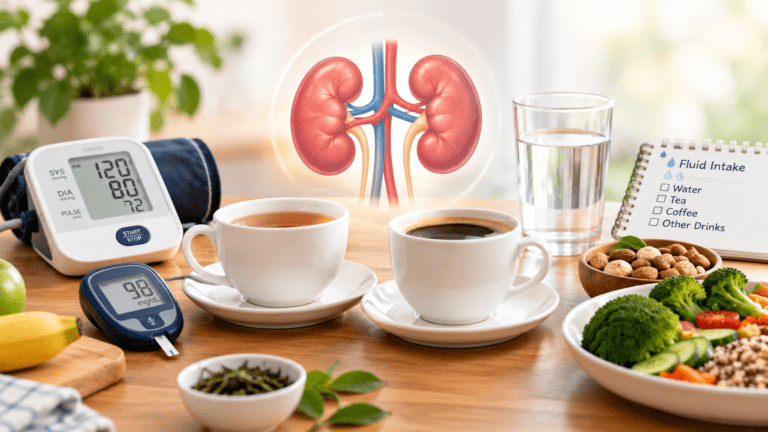
Having kidney disease does not automatically mean you have to give up tea or coffee. However, the amount you drink may need to be considered based on your kidney function, blood pressure, blood sugar, fluid intake, medications, and other health conditions.

Can Tea and Coffee Affect Kidney Health?
Tea and coffee contain caffeine, which can make you feel more alert and may temporarily increase blood pressure in some people.
This can be important for people with kidney disease, especially those who already have difficulty controlling their blood pressure.
The concern is not always about tea or coffee itself. The amount you drink and what you add to your beverage can also make a difference.
Can People With Kidney Disease Drink Tea?
Many people with kidney disease can drink tea in moderation. However, dietary needs can vary depending on kidney function and overall health.
The type of tea, serving size, and how often you drink it can all matter.
For example, adding a lot of sugar to tea may not be a good choice if you also have diabetes or are trying to manage your weight.
If your doctor has advised you to restrict fluids, remember that tea also counts towards your daily fluid intake.
Can People With Kidney Disease Drink Coffee?
Some people with kidney disease may also be able to drink coffee in moderation.
However, coffee contains caffeine. If you have uncontrolled high blood pressure or are sensitive to caffeine, you may need to limit your intake.
It is also important to consider what you add to your coffee. Large amounts of sugar, cream, or other high-calorie ingredients may not be suitable for everyone.
When Should You Be Careful With Tea or Coffee?
You may need to be more careful with tea and coffee if you have:
- High blood pressure
- Diabetes
- A fluid restriction
- Abnormal potassium or phosphorus levels
- Certain heart conditions
- Sensitivity to caffeine
Your doctor or dietitian can help you understand whether you need to reduce your intake.
Does Tea or Coffee Cause Kidney Failure?
No. Drinking tea or coffee does not automatically cause kidney failure.
Chronic kidney disease can develop for many reasons, including diabetes, high blood pressure, certain kidney conditions, genetic factors, infections, and long-term use of some medicines.
However, drinking excessive amounts of caffeinated beverages or adding too much sugar may not be a healthy choice, especially if you have other health conditions.
Do Kidney Patients Need to Stop Tea and Coffee Completely?
Not necessarily.
There is no single rule that applies to everyone with kidney disease.
Some people may be able to enjoy a small amount without any problem, while others may need to limit these drinks because of blood pressure, fluid restrictions, potassium levels, diabetes, or other health concerns.
Instead of completely avoiding a food or drink based on general advice, it is better to understand what is appropriate for your individual condition.
What About Green Tea and Herbal Tea?
Green tea and herbal teas are often considered healthy, but that does not mean every type is suitable for everyone with kidney disease.
Some herbal products may contain ingredients that can interact with medicines or may not be appropriate for certain health conditions.
Natural does not always mean safe for everyone.
If you have kidney disease and regularly drink herbal or specialty teas, talk to your doctor or dietitian about whether they are suitable for you.
What Matters More for Kidney Health?
Instead of focusing only on tea and coffee, it is important to look at your overall kidney care.
Some important habits include:
- Keeping your blood pressure under control
- Managing blood sugar if you have diabetes
- Following the diet recommended for your condition
- Taking prescribed medicines as directed
- Following your doctor’s advice about fluid intake
- Avoiding unnecessary painkillers and self-medication
- Getting regular kidney tests when recommended
These factors are generally more important than simply deciding whether to drink tea or coffee.
How Much Tea or Coffee Can You Drink?
There is no fixed amount that is suitable for every person with kidney disease.
The appropriate amount can depend on your kidney function, blood pressure, fluid restrictions, medications, diet, and other health conditions.
So, rather than following a specific number of cups, discuss your usual tea or coffee intake with your doctor or dietitian.
Final Thoughts
Having kidney disease does not automatically mean that you have to give up tea or coffee forever.
For many people, moderate consumption may be possible as part of an appropriate diet. However, your individual health condition should always be taken into account.
If you have chronic kidney disease, high blood pressure, diabetes, fluid restrictions, or abnormal potassium levels, speak with your doctor or dietitian before making major changes to your diet.
The goal is not to fear every food or drink. It is to understand what works best for your kidneys and your overall health.
Medical Disclaimer
This article is intended for general educational purposes only. Dietary needs can vary from person to person, especially for people with kidney disease. Do not change your diet, fluid intake, or medicines without consulting a qualified healthcare professional.